
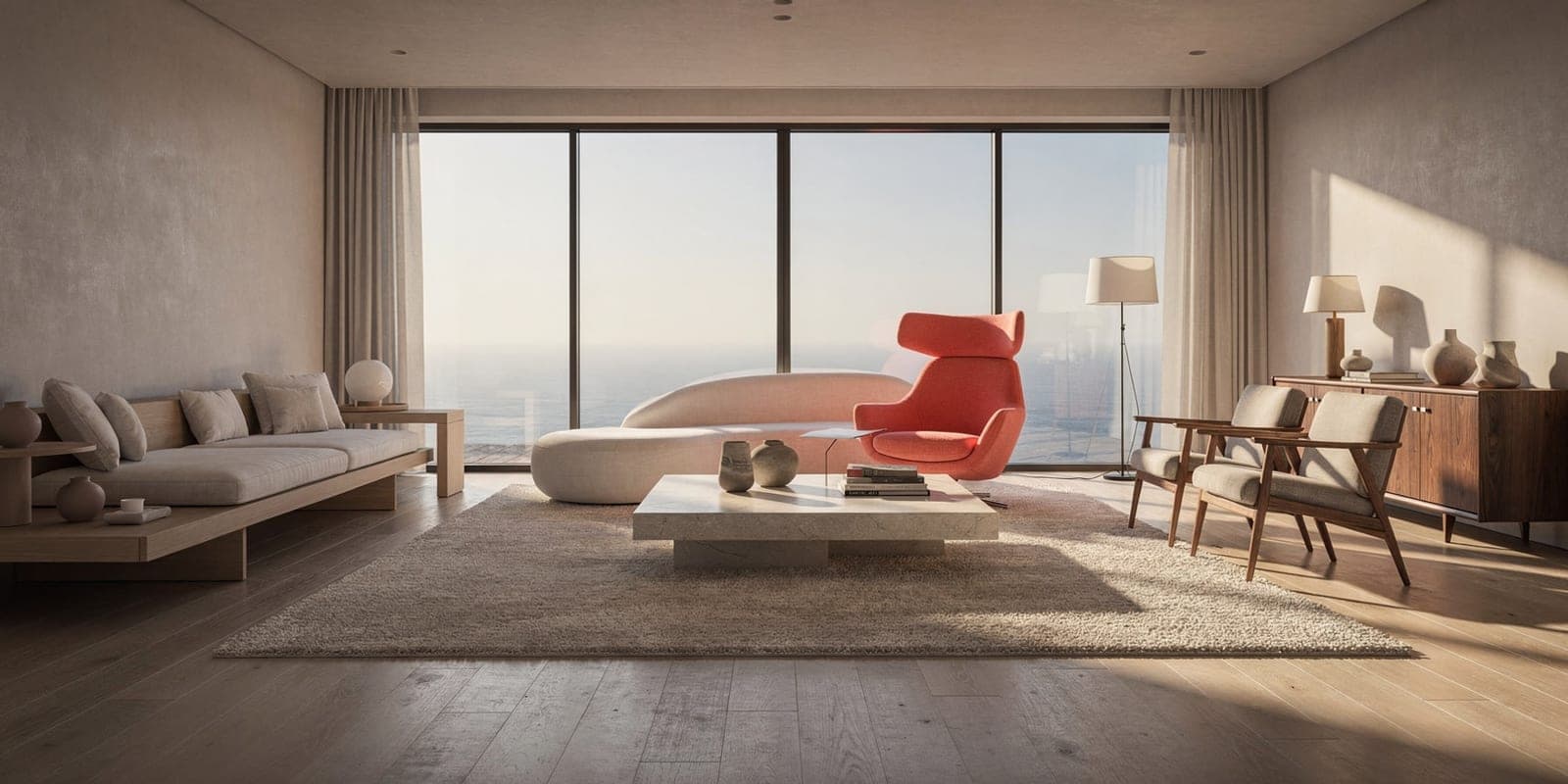
The best virtual staging style is not necessarily the most fashionable one. It is the style that makes the room easy to understand, fits the property's architecture, and feels credible to the buyer most likely to book a viewing.
Stage the same empty room in Modern, Scandinavian, Industrial, or Luxury furniture and the walls do not move. Yet the room can feel larger, warmer, younger, more formal, or more expensive. This guide compares all 14 PropertyPixel virtual staging styles, explains what each one communicates, and gives you a practical way to choose between them.
Quick Comparison of All 14 Virtual Staging Styles
| Style | Visual character | Best fit | Watch for |
|---|---|---|---|
| Modern | Clean lines and restrained decor | Renovated homes and city apartments | Results that feel too generic |
| Contemporary | Current shapes and layered textures | New builds and design-conscious buyers | Trend-led pieces dating quickly |
| Scandinavian | Pale wood, soft neutrals, practical furniture | Bright apartments and compact homes | A room feeling sparse or cold |
| Minimalist | Few pieces and generous negative space | Small rooms and architectural properties | Too little furniture to show scale |
| Mid-Century Modern | Warm wood, tapered legs, stronger accents | Character homes and design-led listings | Styling that fights the architecture |
| Industrial | Metal, leather, dark wood, loft references | Lofts and warehouse conversions | Dark furniture shrinking the room |
| Coastal | Light fabrics, natural textures, blue accents | Beach homes and warm-climate markets | Decor becoming overly themed |
| Farmhouse | Comfortable forms and rustic materials | Family, suburban, and rural homes | Visual clutter in compact rooms |
| Traditional | Symmetry, classic forms, layered decor | Older homes and formal rooms | Heavy furniture making a room feel dated |
| Luxury | Polished materials and statement furniture | Premium homes and developments | A look that exceeds the property's positioning |
| Hamptons | Whites, blues, classic elegance | Coastal estates and refined beach homes | Too nautical or overly formal |
| Japandi | Japanese-Scandinavian calm, natural wood | Modern apartments and serene spaces | Feeling too sparse or impersonal |
| Glam | Luxe textures, bold contrast, metallic accents | Urban luxury and statement listings | Overpowering small rooms |
| Bohemian | Layered textiles, earthy tones, relaxed vibe | Creative buyers and eclectic properties | Visual clutter that hides the room |
The table is a starting point, not a ranking. A convincing Scandinavian result can be wrong for a formal Georgian room, while a Traditional result can be exactly right.
What Changes When the Room Stays the Same?
Virtual staging does more than add furniture. Four choices change how a buyer reads the photograph.
Furniture scale
A low-profile sofa leaves more wall visible and can make a room feel open. A deep sectional establishes a family use case but may make the same floor area feel tighter. Scale must remain believable relative to doors, windows, and ceiling height.
Visual density
Minimalist and Scandinavian staging preserve negative space. Farmhouse, Traditional, and Luxury styles usually add more layers. Neither approach is inherently better. The right density depends on the size of the room and how much architectural detail already competes for attention.
Color and material
Pale timber and linen create a different mood from leather, dark metal, velvet, or polished stone. The virtual furniture should work with the flooring, wall color, natural light, and permanent finishes already in the photograph.
The implied buyer
Every style suggests a lifestyle. Coastal staging hints at relaxed, warm-weather living. Industrial styling suggests an urban buyer. Farmhouse reads as comfortable and family-oriented. Luxury signals a higher price point. Choose that signal deliberately.
All 14 Styles, Room by Room
1. Modern
Modern virtual staging uses clean silhouettes, neutral colors, and limited decoration. It is often the safest option for a broad audience because it feels current without committing to a strong theme.
Use it for: renovated homes, urban apartments, new construction, and listings where you need a versatile default.
Check the result for: furniture that is distinctive enough to feel intentional. An overly generic Modern room can look like a furniture catalog rather than a home.
2. Contemporary
Contemporary staging reflects what is current now: rounded seating, layered fabrics, sculptural lighting, and a softer palette. It can give a recently updated property more personality than a basic Modern treatment.
Use it for: new builds, city apartments, and listings aimed at design-aware buyers.
Check the result for: trend-led objects that distract from the room or make the image feel dated before the listing closes.
3. Scandinavian
Scandinavian rooms rely on pale woods, light neutrals, simple forms, and practical layouts. The style is especially effective when the source room already has good daylight and restrained finishes.
Use it for: compact apartments, starter homes, family listings, and rooms where brightness matters.
Check the result for: enough warmth and furniture to establish scale. Pale does not have to mean empty.
4. Minimalist
Minimalist staging uses the fewest pieces. It keeps attention on ceiling height, windows, flooring, and circulation, making it useful when the architecture is the real selling point.
Use it for: small spaces, premium apartments, and architect-designed homes.
Check the result for: a room that looks unfinished. Buyers still need a sofa, bed, or dining table to understand function and proportion.
5. Mid-Century Modern
Tapered legs, warm timber, recognizable silhouettes, and selective color give Mid-Century Modern staging a strong identity. It is memorable, but less neutral than Modern or Scandinavian.
Use it for: period properties, character homes, and design-led apartments.
Check the result for: fine details such as chair legs and table edges, plus a believable relationship between vintage-influenced furniture and the building itself.
6. Industrial
Industrial styling introduces darker wood, metal, leather, and warehouse-inspired forms. It can reinforce existing brick, concrete, large windows, or exposed structure.
Use it for: lofts, warehouse conversions, and urban properties with strong architectural features.
Check the result for: wall treatments or lighting that go beyond decor. Some style generators may introduce subtle brick texture or industrial-looking fixtures, so compare the result with the original and reject any change that misrepresents a permanent feature.
7. Coastal
Coastal staging uses light upholstery, natural fibers, and restrained blue or sandy accents. Done well, it feels relaxed rather than nautical.
Use it for: beach homes, holiday rentals, bright villas, and properties in warm climates.
Check the result for: obvious themes. Shells, anchors, and excessive blue can turn a credible listing image into a set.
8. Farmhouse
Farmhouse staging favors comfortable furniture, natural materials, and a familiar sense of home. It can soften a vacant family property and make an ordinary room feel welcoming.
Use it for: suburban homes, rural properties, family listings, and interiors with warm finishes.
Check the result for: too many decorative pieces. Rustic details should not obscure the room or make circulation look tight.
9. Traditional
Traditional staging uses symmetry, classic furniture forms, and more layered decoration. It often works where sparse modern furniture would feel disconnected from the architecture.
Use it for: older properties, formal living rooms, larger homes, and buyers who prefer established interiors.
Check the result for: oversized or overly ornate furniture. Traditional should feel timeless, not heavy.
10. Luxury
Luxury staging creates stronger visual impact through statement lighting, refined upholstery, and premium-looking materials. It works only when the room, finishes, and market position support the story.
Use it for: high-end apartments, villas, premium developments, and strong hero images.
Check the result for: credibility. Expensive-looking furniture should elevate the room without implying finishes or a price point the property does not have.
11. Hamptons
Hamptons styling blends coastal ease with classic elegance — whites, soft blues, refined furniture, and a polished but relaxed feel. It works well for upscale coastal and resort properties.
Use it for: coastal estates, beach homes with premium finishes, and properties targeting buyers who want relaxed sophistication.
Check the result for: balance between nautical references and formality. The style should feel refined, not themed.
12. Japandi
Japandi combines Japanese minimalism with Scandinavian warmth — natural wood, soft neutrals, clean lines, and a sense of calm. It suits spaces where serenity is part of the selling point.
Use it for: modern apartments, wellness-focused properties, and buyers drawn to thoughtful simplicity.
Check the result for: enough furniture to establish scale and function. The style should feel intentional, not unfinished.
13. Glam
Glam staging uses luxe textures, bold contrast, and metallic accents to create visual impact. It suits urban luxury and listings where a strong first impression matters.
Use it for: high-rise apartments, statement properties, and listings targeting buyers who value drama and polish.
Check the result for: proportion. Glam pieces can overwhelm small rooms or feel disconnected from more modest finishes.
14. Bohemian
Bohemian staging layers textiles, earthy tones, and collected-looking pieces to create a relaxed, creative feel. It works for properties with character and buyers who value individuality.
Use it for: eclectic homes, creative markets, and properties where personality is part of the appeal.
Check the result for: visual clutter. The layered look should highlight the room, not obscure it.
How to Choose the Best Style for a Listing
Use this six-part check before generating the first staged image.
- Start with architecture. Note the age, flooring, windows, ceiling height, trim, and permanent finishes. Eliminate styles that fight those features.
- Define the likely buyer or renter. A first-time buyer, family, luxury investor, and holiday guest read the same room differently.
- Match the price point. The furniture should support the listing's position rather than inflate it.
- Account for location. Coastal, urban, suburban, and rural properties support different visual stories.
- Respect room size. Decorative styles can overwhelm small rooms; sparse styles can make very large rooms feel cold.
- Keep the listing coherent. Use one overall direction across staged rooms, even when the exact furniture changes.
Pro Tip
If two styles both fit, generate the main living room in each before staging the rest of the listing. Compare them at thumbnail size and full resolution. The better option is the one that explains the room clearly without making the furniture the main subject.
PropertyPixel offers 14 virtual staging styles, so you can compare a neutral option against a more specific one before committing to the complete listing. If you process many shoots, build that comparison into a repeatable AI workflow for real estate photographers rather than choosing from scratch on every job.
Quality Control Before You Publish
Review every staged photograph at full resolution. Check that:
- Furniture contacts the floor and casts believable shadows
- Sofas, beds, tables, and rugs are correctly scaled
- Doors, windows, room geometry, built-ins, and flooring remain unchanged
- Feature-wall textures and decorative lighting do not misrepresent permanent finishes
- Furniture does not block circulation or access
- Mirrors and reflections make sense
- Fine details such as chair legs and lamp stems are complete
- The design direction remains consistent across rooms
- The original image is retained for comparison and disclosure
Virtual staging should add movable furniture and decor, not change the architectural truth of the property. Follow the disclosure rules of the relevant MLS or property portal. Our MLS photo requirements guide explains the broader export and disclosure checks.
Frequently Asked Questions
What is the most versatile virtual staging style?
Modern, Contemporary, and Scandinavian styles usually work across the widest range of listings. The architecture and buyer profile should still decide the final choice.
Can virtual staging make a room look larger?
Appropriate furniture scale and placement can make the layout easier to understand. It should not distort dimensions or use implausibly small furniture to create a misleading impression.
Should every room use the same style?
Use a coherent direction across the listing. The exact pieces can change, but moving from Scandinavian in the living room to Industrial in the bedroom usually makes the gallery feel inconsistent.
Which rooms benefit most from virtual staging?
Living rooms, primary bedrooms, dining areas, and open-plan spaces benefit most because furniture helps buyers understand scale and function.
Should the empty-room photo stay in the listing?
Rules vary by market. Always retain the original and disclose virtual staging where required. Including the original alongside the staged version is a transparent option when the platform allows it.
The Bottom Line
The best virtual staging style is the one that helps the right buyer understand the actual room. Modern may be the safest default, but Scandinavian can add warmth, Traditional can respect an older home, and Coastal or Industrial can reinforce a genuine sense of place.
Choose for architectural fit, audience, and credibility. Then review the output for scale, layout, and accuracy before publishing.
Compare Virtual Staging Styles on Your Room
Upload one empty-room photo, try different design directions, and download the most credible result at full listing resolution.
No card required · Free results include a watermark
Continue Reading
AI Virtual Staging: Does It Actually Look Real?
The quality checks that separate convincing staging from obvious AI output.
Read articleVirtual vs Traditional Staging: Cost and ROI
Compare cost, turnaround, buyer experience, and the listings each option suits.
Read articleAI Workflow for High-Volume Real Estate Photographers
Build staging and enhancement into a controlled production process.
Read articleTry it on a photo from your next listing.
Brighten a room, clear clutter, or try virtual staging. Start with 500 free credits. No card required. Free results include a watermark.