
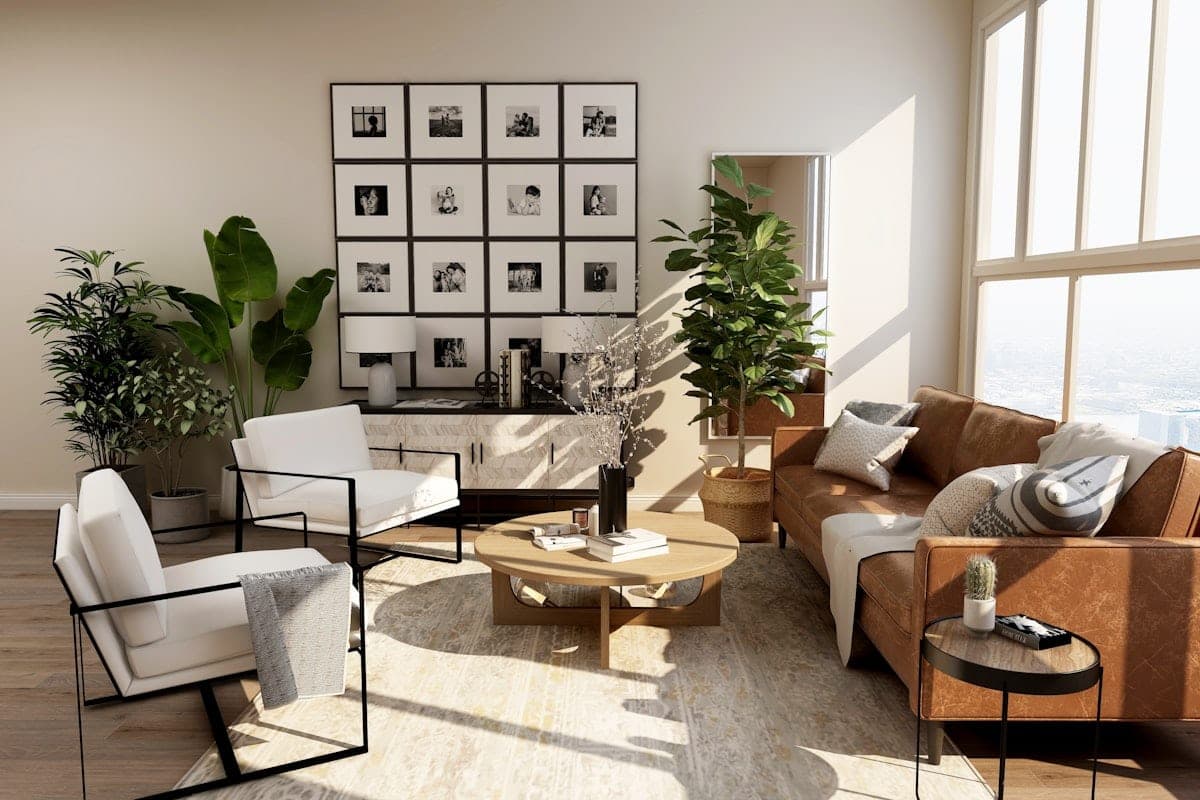
Staging isn't optional anymore. The question in 2026 isn't whether to stage — it's how. Virtual staging and traditional staging solve the same problem with fundamentally different tradeoffs, and choosing the wrong one for a listing can cost you thousands in either direction.
This guide breaks down the real costs, the ROI math at three price points, and a clear framework for deciding which approach fits each listing.
At a Glance
| Factor | Traditional staging | Virtual staging (AI) |
|---|---|---|
| Typical total cost (3BR) | $5,000–$15,000 | $10–$150 |
| Turnaround | 1–2 weeks | Minutes |
| Style changes | Re-stage (expensive) | Re-run (~$0.50–$1) |
| Physical presence at showings | Yes | No |
| Disclosure required | No | Yes |
| Best for | Luxury $1M+, open-house markets | Most listings under $1M |
What Traditional Staging Actually Costs
The upfront quote from a stager rarely tells the full story. Here's the complete picture.
Consultation. Most stagers charge $300–$600 for an initial walkthrough. Some offer it free if you sign a staging contract, but that "free" typically rolls into higher monthly rates.
Furniture & decor rental. This is where the real money goes. A three-bedroom home needs the main living area, kitchen, primary bedroom, and often a second room staged. Rental typically costs $2,000–$5,000 per month. Luxury stagers working on $2M+ properties can charge $10,000–$20,000 per month for premium pieces.
Delivery, setup & removal. Moving furniture in requires a crew. Expect $500–$1,000 for setup and similar for removal when the listing closes or the contract expires.
The three-month reality. Most staging contracts run three months because the average home sits on market for 30–60 days and you don't want to destage before the deal closes. A realistic mid-range total: $400 consultation + $3,500/month × 3 months + $800 setup + $800 removal = roughly $12,500.
⚠️ Important
Hidden costs to watch for: property damage liability (one scratched dining table can cost $2,000+), insurance requirements on rented pieces, and the 1–2 week lead time that can delay a listing hitting the market.
What Virtual Staging Actually Costs
Virtual staging comes in two main forms: human-edited services and AI-native platforms.
Human-edited services. Services like BoxBrownie and Styldod charge $16–$40 per image with a 24–48 hour turnaround. Quality is high and editors understand real estate. For a listing with 10 staged photos, expect $160–$400 total.
AI-native platforms. PropertyPixel virtual staging costs 100 credits per generated image. The smallest pack is $15 for 1,500 credits: enough for 15 results at $1 each if fully used. Producing 10 results uses $10 of that pack, but the upfront purchase is still $15. Monthly plans can lower the effective rate if you use the allowance. Changing the style and generating another result uses another 100 credits.
No ongoing cost. Virtual staging is a one-time per-image fee. No monthly rental, no removal charge. Once the photos are generated, they're yours to use for the life of the listing.
⚠️ Important
Virtually staged photos must be disclosed in the listing. Most MLS systems require "virtually staged" in the photo caption or listing remarks. Check your local MLS rules before publishing — requirements vary by state and board.
ROI at Three Price Points
$350,000 home — 2% staging lift = $7,000 gain
- Traditional: $7,000 − $10,000 = −$3,000
- Virtual: $7,000 − $80 = +$6,920
- Virtual wins clearly.
$750,000 home — 3% staging lift = $22,500 gain
- Traditional: $22,500 − $12,000 = +$10,500
- Virtual: $22,500 − $120 = +$22,380
- Both work. Virtual leaves $12K more on the table.
$2,000,000 home — 4% staging lift = $80,000 gain
- Traditional: $80,000 − $25,000 = +$55,000
- Virtual: $80,000 − $300 = +$79,700
- Traditional earns its cost through the showing experience.
The ROI math favours virtual staging at almost every price point below $1M. Above $1M, the showing experience starts to matter as much as the listing photos — which is where traditional staging earns its place.
When Traditional Staging Wins
Luxury listings over $1M. Buyers at this price point expect to walk into a fully staged space. They're already committed enough to tour in person, and the physical experience of a well-staged home closes deals that photos alone can't.
Open-house-heavy markets. Some markets and price ranges still drive a high percentage of offers through open houses. If foot traffic is doing the selling, empty rooms hurt you in person — not just online.
When you need multiple offers fast. In competitive markets where the goal is 10%+ over asking with multiple offers in the first weekend, the marginal cost of traditional staging can pay for itself through the showing experience alone.
When Virtual Staging Wins
Most listings under $1M. The cost-benefit math is straightforward. Most buyers are doing initial browsing online, and virtually staged photos solve the "I can't visualise this empty space" problem without the cost.
Speed-sensitive listings. Relocation sales, probate, divorce, estate closeouts — whenever the listing needs to go live now, virtual staging is the only realistic option. Traditional staging's 1–2 week lead time doesn't fit.
Testing multiple buyer personas. Virtual staging lets you show the same living room in Modern, Traditional, and Farmhouse styles for the cost of three re-runs. Useful for listings in mixed-demographic neighborhoods where multiple buyer types might respond differently.
Remote or rural properties. A property 90 minutes from the nearest staging company isn't getting traditional staging without eating into the logistics budget. Virtual staging is the practical solution.
The Hybrid Approach
The highest-performing agents at mid-range price points often don't choose one or the other. The hybrid model works like this:
- Shoot the home empty or minimally furnished
- Virtually stage the listing photos in the style best suited to the target buyer
- Bring in a few real anchor pieces for showings — a dining table, a couple of armchairs, a bed — at a fraction of full staging cost
- For luxury listings only, add selective full staging to two or three "wow" rooms
This delivers great listing photos driving online traffic, a workable showing experience, and costs 20–30% of full traditional staging.
The Bottom Line
Virtual staging is the default right answer for most listings in 2026. The cost gap is too large to ignore at standard price points, and buyer expectations have shifted — "virtually staged" in the listing caption no longer puts buyers off.
Traditional staging earns its place on luxury listings, open-house-dependent markets, and any situation where the physical showing experience is where deals actually close. For everything else, the hybrid model — great virtual photos, a few real props for showings — is hard to beat.
Stage a Listing for the Price of a Coffee
Try virtual staging on an empty room from your next listing. Choose from 14 styles and compare the result before deciding what the rest of the property needs.
No card required · Free results include a watermark
Continue Reading
AI Virtual Staging: Does It Actually Look Real?
An honest look at what modern AI staging produces — and what buyers think of it.
Read articleAI Real Estate Photo Editing: The Complete 2026 Guide
How AI photo editing fits into a working agent workflow — and where it doesn't.
Read articleReal Estate Photo Editing Software Compared
How the main AI tools stack up on features, cost, and turnaround.
Read articleTry it on a photo from your next listing.
Brighten a room, clear clutter, or try virtual staging. Start with 500 free credits. No card required. Free results include a watermark.