
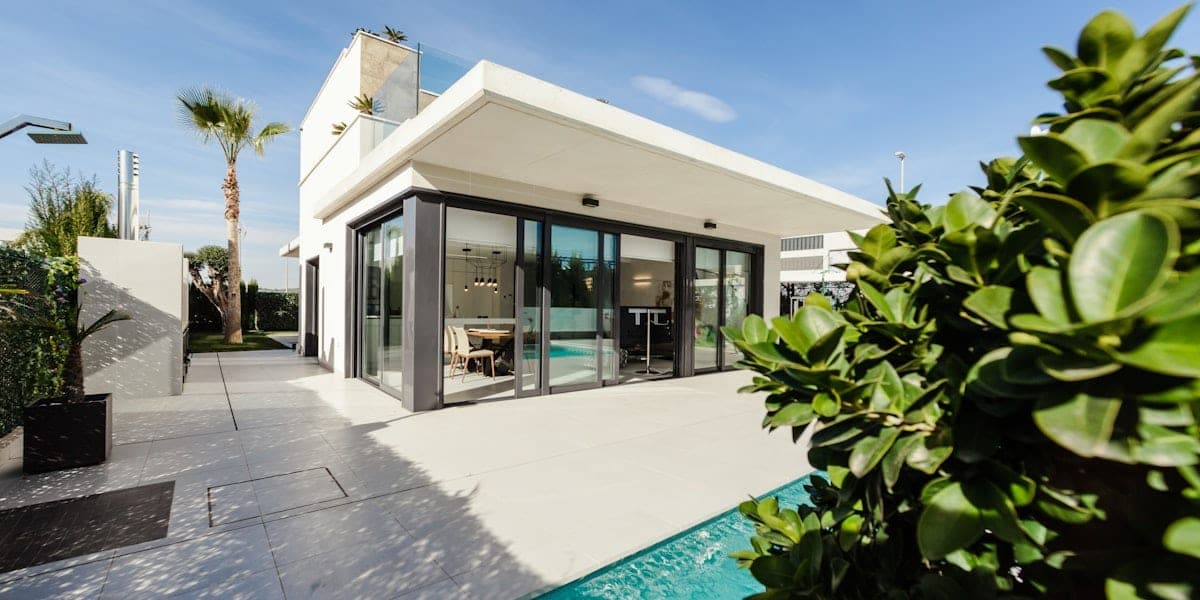
Luxury real estate photography is the one slice of listing photography where AI still can't fully replace a great human shooter — and yet AI enhancement is probably the biggest efficiency upgrade the luxury market has seen since drones. This guide covers what actually matters for luxury listing photography in 2026: gear choices, twilight and aerial shoots, when to hire a specialist, and where AI enhancement pulls its weight on million-dollar-plus listings.
If you're listing a $5M waterfront home, you're not uploading phone photos and calling it done. Luxury buyers expect a level of polish — mood, light, staging, editing — that reflects the price tag. On the other hand, if you're a listing agent handling a $1.2M suburban home in a hot market, the gap between "hired a luxury shooter" and "great phone photos run through AI enhancement" has narrowed a lot.
The right answer depends on the property, the buyer, and the marketing plan. This guide walks through all of it.
What Makes Luxury Photography Different
A standard listing shoot is about showing the rooms. A luxury listing shoot is about selling a lifestyle. That sentence sounds like marketing fluff, but it has a practical consequence: you need more photos, more time, more gear, and more post-production per listing.
Here's the shape of it:
| Category | Standard Listing | Luxury Listing ($2M+) |
|---|---|---|
| Photo count | 20-30 | 40-75 |
| Time on site | 2-3 hours | 6-12 hours (sometimes multi-day) |
| Editing turnaround | 24-48 hours | 3-5 days |
| Photographer budget | $200-500 | $1,500-5,000 |
| Gear expectation | DSLR + tripod | Full-frame + tilt-shift + drone + strobes |
| Media mix | Photos + maybe video | Photos + twilight + drone + video + 3D tour |
The real differentiator isn't that luxury photos are "better." It's that they cover the property more completely — every angle of the pool deck, every detail of the wine cellar, the view at golden hour, the view at twilight, the aerial reveal. You're producing an asset library, not a shoot.
When a Human Luxury Photographer Still Beats AI
We'll be straight with you. PropertyPixel handles a huge range of enhancement work well — lighting, clutter removal, sky replacement, day-to-dusk, virtual staging. But at the very top end of the market, there are four things AI isn't replacing yet:
- Mood and intent. A great luxury shooter decides how the room should feel — cinematic, serene, dramatic — and shoots for that. AI enhances what's in the frame; it doesn't make compositional choices.
- Lighting a dark space for a specific look. When you need 4-5 strobes balanced against a sunset through a wall of glass to create a signature shot, that's a human-with-a-kit job. AI tone-balancing doesn't substitute for actual light placement.
- Tilt-shift architectural correction at scale. AI perspective correction works well on phone shots. On a 50-story penthouse with geometrically complex rooflines, a tilt-shift lens produces cleaner results.
- Directing the shot. Luxury shoots often involve a stylist, a stager, and a producer moving furniture and props between frames. That coordination is human work.
If a listing is $5M+ and the agent's reputation is on the line, hire a luxury shooter. The cost is a rounding error on the commission, and AI enhancement is a complement to their work, not a substitute.
Where AI enhancement wins at the luxury tier: speed and polish on the shots the photographer already captured. Sky replacement on a cloudy exterior, subtle lighting lift on interior shots, virtual staging on an empty guest wing, day-to-dusk conversion when the shooter couldn't come back for a second twilight session. That's where PropertyPixel pricing pays back fast — the same credits you'd use on a $400K listing produce outsized value on a $3M one.
Luxury Photography Pricing: What to Charge and What to Pay
Whether you're a photographer pricing yourself or an agent budgeting a shoot, the tiers look roughly like this in 2026:
Entry luxury ($750K-$1.5M)
- Shoot fee: $800-1,500
- Deliverables: 30-45 edited images, basic drone exteriors
- Time on site: 4-6 hours
- Typical extras: Twilight shot, one aerial sequence
Mid luxury ($1.5M-$5M)
- Shoot fee: $1,500-3,000
- Deliverables: 45-60 edited images, drone, twilight exteriors, optional walkthrough video
- Time on site: 6-8 hours, sometimes across two visits
- Typical extras: Virtual staging for one or two rooms, 3D tour
Ultra luxury ($5M+)
- Shoot fee: $3,000-7,500+
- Deliverables: 60+ edited images, full video package, multiple twilight angles, extensive drone coverage
- Time on site: Multi-day, often with stylist and producer
- Typical extras: 8K video, custom edit, rush delivery
Add-on pricing agents should expect:
- Aerial photo + video package: $500-1,200
- Twilight-specific shoot: $400-800
- Virtual staging: $300-600 per room
- 3D walkthrough tour: $800-1,500
- Rush delivery (24-48 hour): +25-50%
Where agents get pricing wrong
Two mistakes agents make on luxury shoots:
- Cutting photo budget to save the seller money. On a $3M listing, $2,000 in photography buys you 30-40 days faster on market. That's worth 3-5x the shoot cost in carrying cost alone.
- Overpaying for a generalist. A $1,200 shoot with a generalist and $300 in AI enhancement credits often beats a $2,500 shoot with a specialist who doesn't understand the property type. Match the photographer to the property.
Gear That Actually Matters for Luxury Work
You don't need all of this. You do need to know what each piece changes.
Camera and lenses
- Full-frame body. Canon R5 Mark II, Sony A7R V, or Nikon Z8. Dynamic range and resolution matter more here than autofocus speed.
- Backup body. Non-negotiable on luxury shoots. A failed shutter mid-shoot on a $5M listing is a reputation-level problem.
- 16-35mm f/2.8. The architectural workhorse. 90% of interior shots happen in this range.
- 24-70mm f/2.8. For detail shots, staging close-ups, and exteriors where you have room to step back.
- 24mm tilt-shift. The single biggest step up from "great" to "pro" on architectural interiors. Keeps verticals perfectly straight without post-crop.
Realistic kit cost: $8,000-15,000. If you're buying it for a luxury business, it pays back in 5-8 shoots.
Lighting
For most luxury interiors, natural light plus strategic fill is the right call. You want the room to look like the light it actually has, just balanced.
- 2-4 strobes (Profoto B10 Plus or Godox AD300 Pro range) for fill and dark-corner lift
- Light modifiers — softboxes for window-style fill, small reflectors for countertop highlights
- Continuous LED panels if you're shooting video the same day
- Heavy-duty tripod — Gitzo or equivalent, with a leveling base for repeatable bracketed shots
Drone
Aerial is table stakes on luxury listings. Grounds, waterfront, neighborhood context, roofline — they all sell through aerial.
- DJI Mavic 3 Cine or Inspire 3 for anything $3M+
- ND filters for controlling exposure in bright sun
- Part 107 certificate — required for commercial drone work in the US
For a deeper breakdown of aerial work, see the drone real estate photography guide.
Pro Tip
The single biggest gear mistake on luxury shoots is skipping the tripod because "the shoot is running long." Handheld shots at luxury finish quality means more motion blur, softer focus on detail shots, and inconsistent framing across bracketed exposures. Plan for the tripod on every shot. If you're bracketing for HDR, it's not optional.
The Techniques That Move the Needle
Exposure bracketing for high-contrast interiors
Luxury interiors usually have big windows and warm interior light. That combination blows out windows or kills interior detail unless you bracket. Shoot 5-7 exposures at 1-stop intervals, keep aperture constant (f/8-f/11), and vary shutter speed.
A deeper walkthrough of the workflow lives in HDR bracketing for real estate photography. The short version: bracket, blend in post, keep the result looking like the room — not like a tourist brochure.
Twilight photography
Twilight shots — the house glowing against a deep blue sky — are the highest-performing listing photo type in almost every market study. They're also hard to capture:
- Shoot window: 15-30 minutes after sunset. You have maybe 20 usable minutes.
- Prep: Every interior and exterior light on, landscape lighting on, pool lights on.
- Weather dependency: You need clear or lightly clouded sky. Overcast kills the shot.
- Scheduling risk: Book a backup date. Weather will eat at least one session per 5-6 bookings.
If you can't get to the property at twilight — or the weather doesn't cooperate — shoot during the day and use day-to-dusk AI conversion to produce the same look. It's not identical to a real twilight shoot (interior glow from actual lights still reads slightly different), but for most listings it's indistinguishable to a buyer scrolling on Zillow.
Sky replacement for exteriors
A grey-day exterior on a $4M listing is a waste of the shoot. Sky replacement used to be a Photoshop retouching job. It's now a one-click fix. PropertyPixel's sky replacement handles this cleanly when the exterior shot was otherwise well-lit.
When it doesn't work well: shots where the sky is only a tiny sliver (the edge detection gets messy around trees), or shots where the existing sky is already partly blue (the match looks uneven). For those, reshoot when you can.
Virtual staging for vacant luxury rooms
Vacant luxury properties photograph badly. Big empty rooms read as "cold" and "institutional" in listings. Physical staging on a luxury property runs $5,000-15,000 per month; AI virtual staging runs a fraction of that per room and lets you show multiple design directions to different buyer segments.
For the full cost comparison, see virtual staging vs. traditional staging.
Multi-Media Packages: Photos Aren't the Whole Deliverable Anymore
Luxury buyers expect more than 60 stills. A 2026 luxury package usually includes:
- Still photos (40-75 per listing)
- Twilight exteriors (3-8 per listing)
- Aerial photos and video (drone flyover, property boundary reveal)
- A 2-3 minute cinematic video walkthrough
- A 3D virtual tour for remote and international buyers
The 3D tour matters more on luxury than on mid-market. Luxury buyers are often out-of-state or international. They use the 3D tour to pre-qualify before a physical visit.
For the trade-offs between 3D tours and video, the 3D tours vs. video walkthroughs comparison covers when each wins.
Honest Limits: What AI Enhancement Can't Do at the Luxury Tier
We've been straight that AI can't fully replace a luxury shooter. Here's the specific list of what it can't do, so you don't find out the hard way:
- Capture composition decisions that weren't made at shoot time. If the shooter framed the room from a doorway, AI can't give you the corner shot.
- Invent rooms, spaces, or views. AI models don't know what's outside the frame.
- Fix motion blur. If a handheld shot softened because of shutter speed, enhancement makes it worse, not better.
- Salvage severely underexposed or overexposed frames. Luxury finish demands tonal range that AI can't synthesize from crushed blacks or blown whites.
- Produce a twilight shot that perfectly matches a real one. Day-to-dusk AI gets close — close enough for 95% of listings — but a luxury buyer comparing your marketing against another listing's real twilight shoot will sometimes notice.
The practical framing: AI enhancement accelerates good inputs. It doesn't rescue bad ones. For a deeper look at how to shoot for AI enhancement, see how to prepare property photos for AI enhancement.
Pro Tip
On any luxury shoot, set up one test shot of the toughest frame — usually the room with the biggest window or the most lighting contrast — and run it through AI enhancement on the spot. If the result looks good, you know the rest of the shoot will clean up well. If not, reshoot that frame with different bracketing before you pack up. Twenty minutes on site beats two hours in the office wondering why the results look off.
Building a Luxury Photography Business
If you're the photographer, not the agent:
- Portfolio over price. Luxury agents hire based on your last ten shoots, not your rate. Show only luxury work.
- One market, deeply. Better to be the go-to photographer for $2M+ listings in one suburb than a generalist across a whole metro.
- Service, not product. White-glove scheduling, communication, delivery. Luxury agents pay for reliability more than technical excellence at this point.
- Use AI on the back end. Don't market yourself as "the AI photographer" — just quietly use it to deliver faster and cheaper than your peers. Sky replacement, day-to-dusk, virtual staging, perspective correction, and upscaling on every shoot.
If you're the agent:
- Match the spend to the price tier. Don't underspend on a $4M listing. Don't overspend on a $1.1M listing when AI-enhanced phone photos would rank equally in search.
- Budget for the full media package. Stills are 60% of the value; video, drone, twilight, and 3D tours are the other 40%.
- Get before-and-afters from your photographer. If they can't show you the enhancement step, they're probably delivering inconsistent quality.
A Final Checklist Before Any Luxury Shoot
Run through this the day before:
- All furniture staged or confirmed with stager
- Landscape crew has mowed, trimmed, and cleared yard debris
- Pool cleaned and water level correct
- Every interior and exterior light bulb working
- Curtains and blinds accessible — plan to open all of them
- Drone flight path checked against local restrictions
- Twilight backup date on calendar
- Shot list confirmed with listing agent
- 3D tour scheduled (same day or within the week)
The shoot day itself goes smoothly when the prep is done. The surprises are what blow the budget.
Wrapping Up
Luxury listing photography is the one place where human craft still drives outcomes. A specialist shooter who understands light, composition, and mood captures photos AI can't generate from scratch. But AI enhancement — applied intelligently to what a good shooter captured — cuts delivery time, unlocks day-to-dusk and virtual staging without extra sessions, and makes the whole luxury workflow 3-5x faster than it was in 2022.
The agents and photographers who win at the top of the market in 2026 aren't picking "human photographer OR AI tool." They're using both. The photographer captures the frame. The AI polishes, converts, stages, and replaces what needs it. Together, the output is better than either one alone.
Give Your Luxury Listings the Finishing Touch
AI-powered sky replacement, day-to-dusk conversion, and virtual staging — the polish luxury buyers expect, delivered in minutes, not days.
No card required · Free results include a watermark
Continue Reading
Drone Real Estate Photography: Complete Guide for Agents
Aerial shots, Part 107 requirements, and pricing strategies for drone photography
Read articleHDR Bracketing for Real Estate Photography
How to capture high-contrast luxury interiors without blowing out the windows
Read articleVirtual Staging vs Traditional Staging: Cost & ROI
Compare costs, timelines, and returns — and when each approach wins on luxury listings
Read articleDubai Real Estate Photography Pricing Guide 2026
Real AED and USD rates for Marina, Palm, and Downtown luxury listings
Read articleTry it on a photo from your next listing.
Brighten a room, clear clutter, or try virtual staging. Start with 500 free credits. No card required. Free results include a watermark.